
Printed Shirt RFQs: Approve Placket Alignment
For a printed-shirt RFQ, approve the artwork on the intended closed front as well as the individual pattern panels. Mark the design elements that matter at the placket and ask the supplier to explain how the selected artwork is positioned across that opening. Xuanao’s digital-print shirt catalogue shows button-front pattern references; the buyer should obtain a matching proof for the exact design and garment version being quoted.
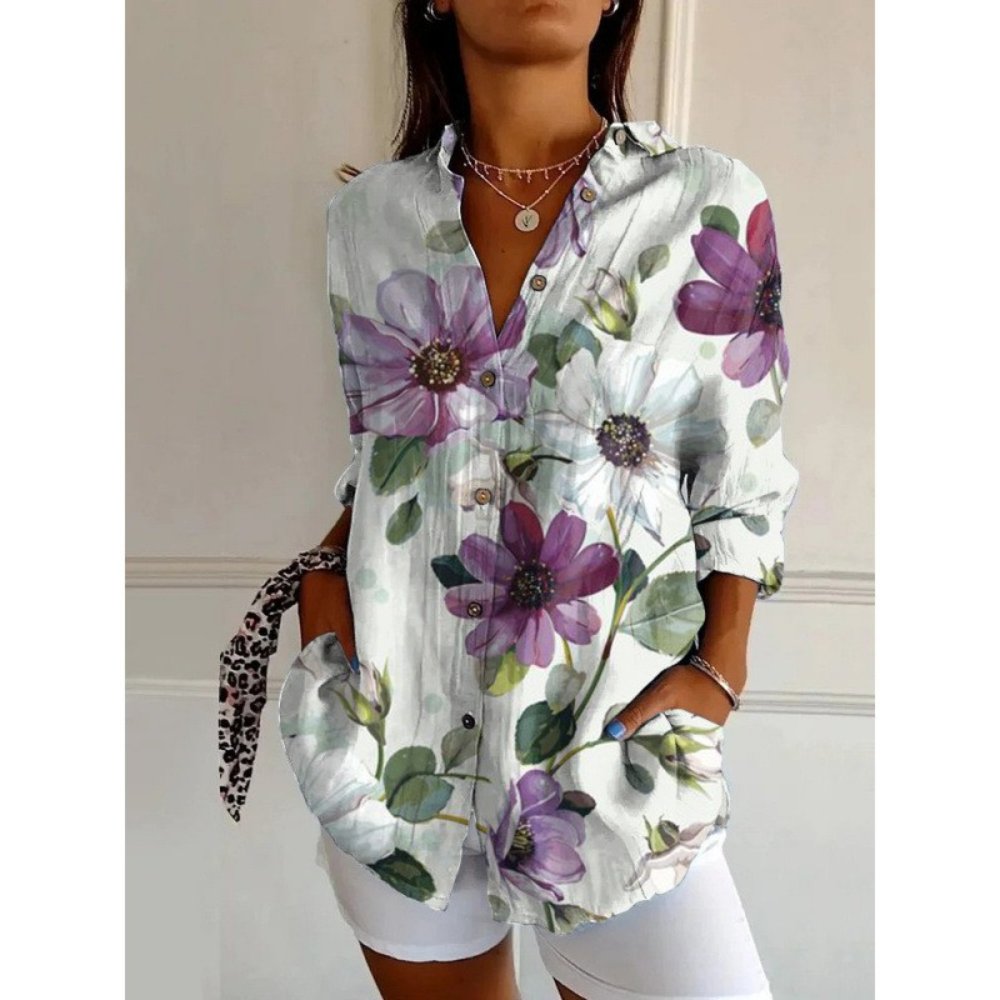
Official floral catalogue reference for the digital-print shirt listing. Use the button-front design to identify the artwork question; this image is not an approved closed-front alignment proof.
Approve the design in the intended closed position
The 3D Digital-Print Shirt listing shows patterned button-front shirts, including a floral design. A buyer selecting an artwork needs to decide how that design should appear across the front opening. A catalogue view with part of the neckline open is a useful starting reference, but it is not a complete closed-garment artwork approval.
Identify the selected design and ask the supplier for a front proof in the intended closed position. Request a reference that makes the placket visible without concealing the design areas being discussed. Keep the artwork version and the garment version together from the first enquiry.
Mark the design elements that matter at the placket
Ask the buyer’s design team to identify the relevant flowers, shapes, lines or other anchors near the front opening. Mark which elements should meet, remain separate or sit at a specified side of that opening. This gives the supplier an answerable placement request rather than an instruction to make the front look right.
Do not require every design element to match unless that is the intended artwork rule and the supplier has confirmed it. Some designs may be approved with an intentional interruption at the opening. The important decision is to record the accepted relationship for the selected design, using clearly named reference points.
Artwork reference
Buyer decision
Supplier reply requested
Selected design
Exact artwork version
Design identifier used in the offer
Front opening
Intended closed position
Matching front proof
Anchor feature
Desired relationship at the placket
Proposed placement explanation
Approval sample
Accepted or revised arrangement
Sample and proof correspondence
Another graphic design from the same official listing. It is a separate catalogue artwork reference, not an approved variant or evidence that the floral design’s placement rules apply to it.
Identify the overlap and visible artwork area
Ask the supplier to identify the front overlap and which artwork area remains visible when the garment is closed as intended. Request the relevant panel or garment reference instead of estimating the concealed area from a styled photograph. Keep this explanation associated with the actual button-front construction offered.
If a design element crosses the opening, ask the supplier to show its proposed placement on both sides. Where the buyer needs an acceptance limit, define the reference points and ask the supplier to confirm the proposed criterion. Do not assign a numerical tolerance from a photograph that contains no measurement scale.
Distinguish panel artwork from garment assembly
A drawing of separate printed panels and a proof of the closed garment answer different questions. Ask for the reference needed to understand how the artwork relates to the completed front. If the supplier uses different terminology for the panels or opening, request a labelled explanation so that the buyer can follow its proposal.
This enquiry does not prescribe a printing or assembly process. The supplier should explain its proposed arrangement and any relevant limitations for the selected design. Keep the purchasing approval focused on the visible result requested, with additional manufacturing information retained where the supplier provides it.
Official dot-and-colour design reference. Similar posed catalogue compositions show different artwork choices, not independent technical angles or production-matching results.
Ask how the placement applies across offered sizes
Request an explanation of the artwork placement for the sizes included in the quotation. Ask whether the same anchor relationship is maintained or whether the design layout changes for particular sizes. Retain any different placement proposals as identified references instead of assuming a single catalogue image defines every size.
If another graphic from the listing is selected, prepare its own placket approval. A floral composition and a design with separate graphic shapes can have different placement priorities. Similar garment poses in the catalogue do not mean the same artwork rule should be transferred between them.
Review the matching sample against one proof
Ask the supplier to identify the sample corresponding to the proposed closed-front proof. Review the relevant design anchors in the agreed garment position and record a focused approval or revision. Mark the exact area requiring clarification instead of requesting an unspecified improvement to the complete print.
Keep the selected artwork and proof revision together.
Identify the garment size and closed position.
Record the accepted relationship at the marked anchors.
Separate changed artwork from a changed garment arrangement.
A visual sample decision concerns the identified arrangement. It does not establish fibre content, print durability, colourfastness or a guarantee that every production item will match a photograph. Define any additional purchasing requirement and supporting evidence separately.
Carry the artwork decision into the enquiry
Send a focused request through the supplier contact page: “For the selected digital-print shirt artwork, please show the intended closed front and the proposed relationship of these marked elements across the placket. Identify the matching sample and any size-specific layout changes.” Keep the answer with the quotation; use the apparel articles for broader purchasing context.
Frequently asked questions
Is one styled catalogue photograph an alignment proof?
Use it to identify the design. Request the intended closed-front proof and a matching sample reference for the artwork being quoted.
Must every graphic continue across the opening?
Record the buyer’s intended relationship and ask the supplier to confirm its proposal. An intentional interruption should be identified explicitly.
Should a second design share the same approval?
Give it a separate artwork reference and confirm its own placket relationship, including any size-specific differences.
Printed shirtsArtwork approvalPlacket alignment