
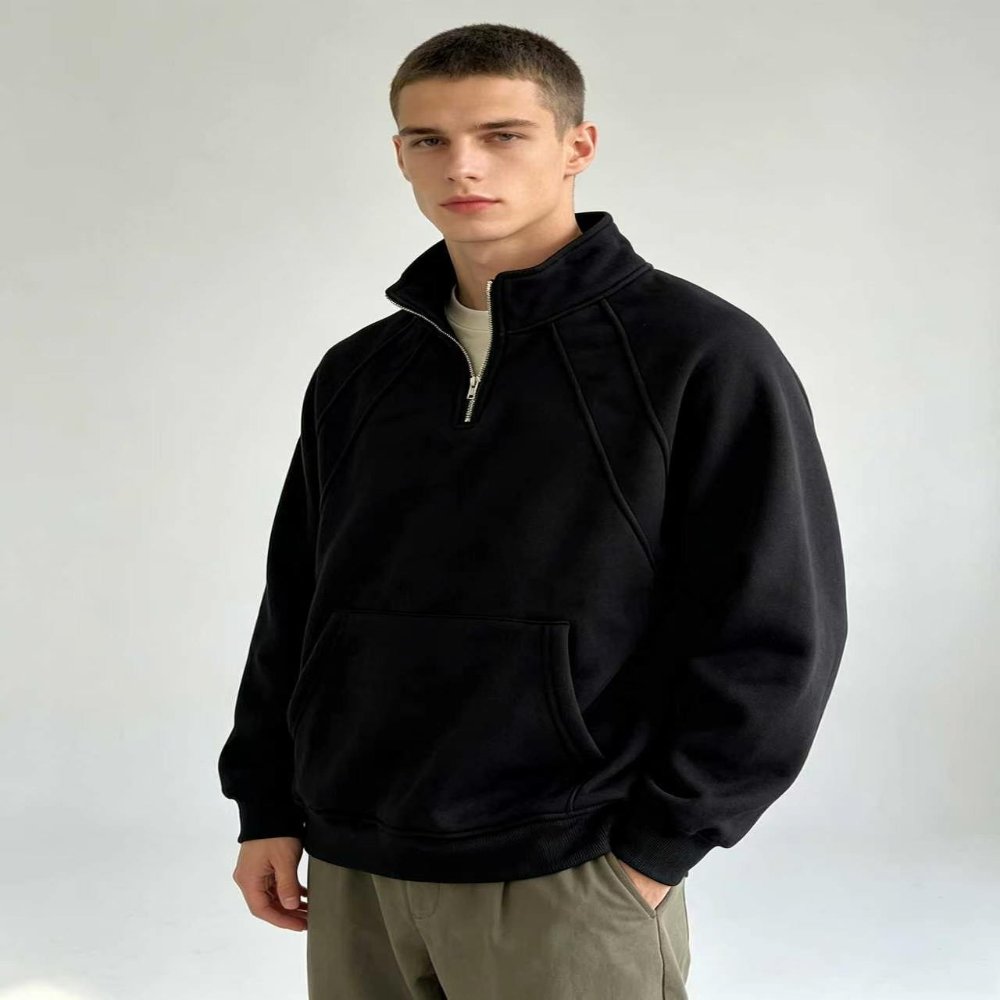
Paneled Zip Tops: Mark the Construction Lines
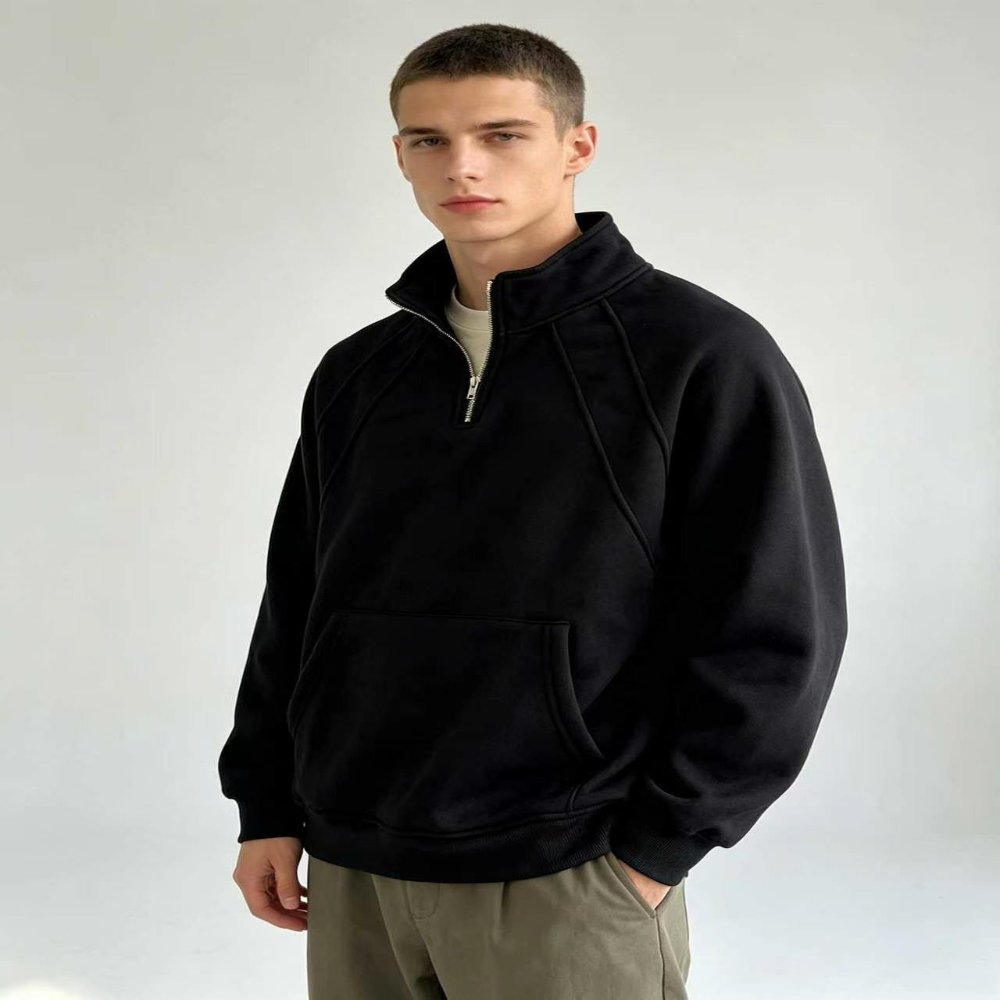
Specify a paneled zip top by marking the visible construction lines on the selected reference and asking the supplier to identify what each line represents. Separate panel joins, decorative details and closure edges in the response. Request the missing back or detail views before accepting the construction, because a single front catalogue pose cannot explain every garment relationship.
A garment can be easy to recognise in a catalogue yet hard to describe in a production enquiry. A line near the shoulder might be read as a panel join, piping or another finish. Buyers sourcing wholesale men’s stand-collar zip-up tops benefit from a marked construction map that resolves those interpretations before sample approval.
Start from the exact visible reference
Use the Xuanao stand collar paneled zip top listing and retain its product link beside the enquiry. Identify the sample or proposed version being discussed. Do not treat a generally similar stand-collar garment as the same construction simply because the front opening and overall silhouette look familiar.
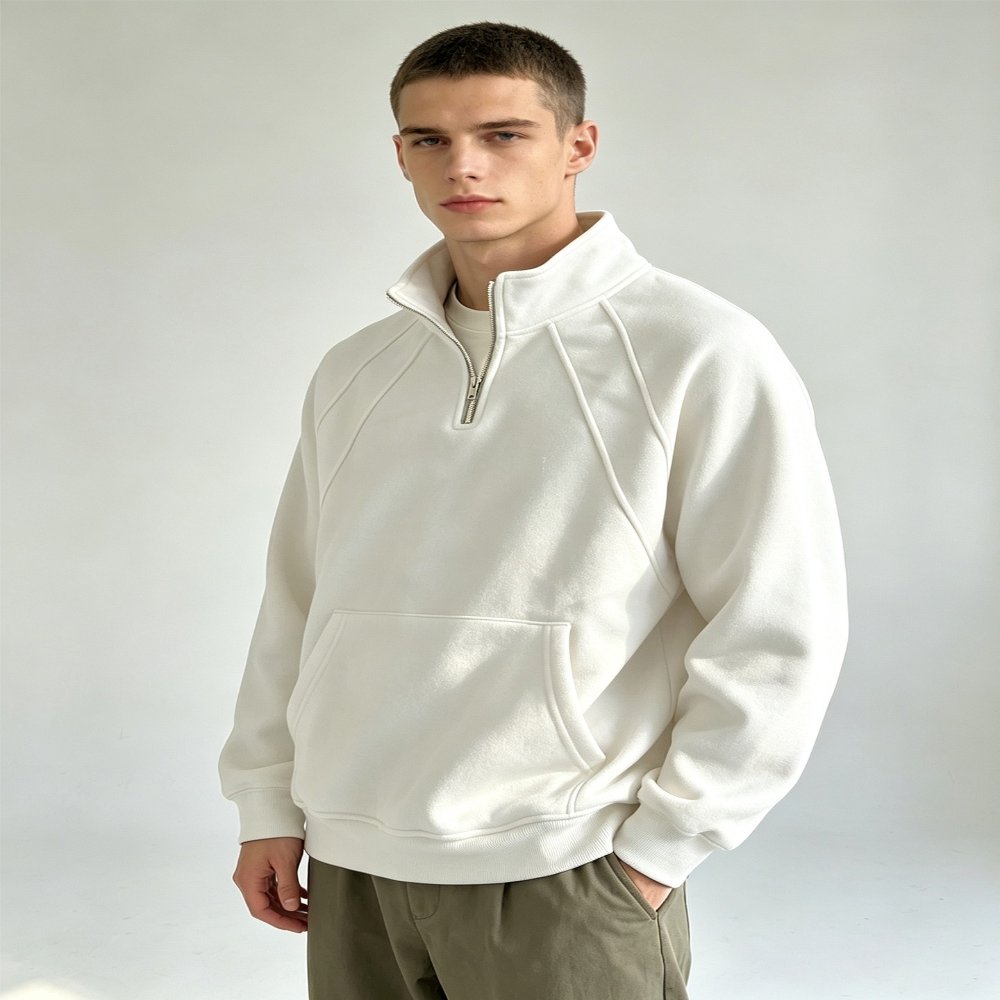
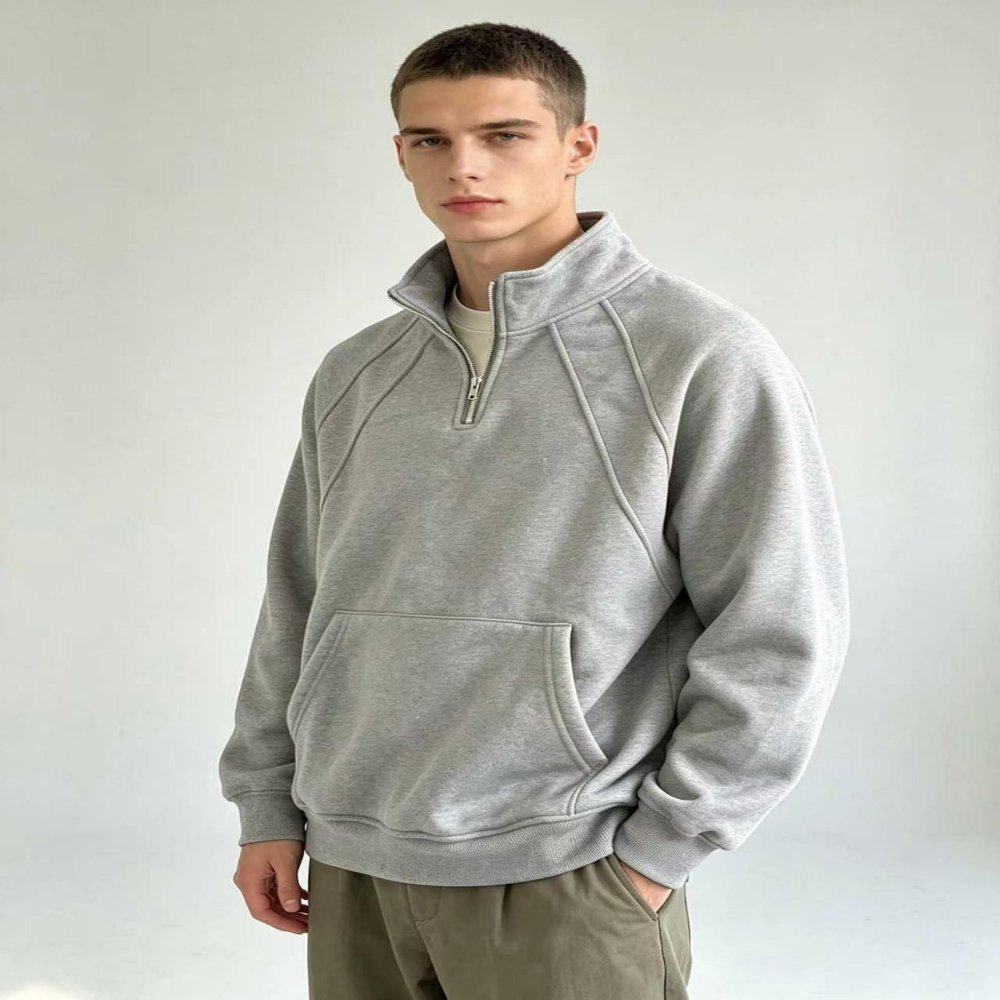
The catalogue colourway images use a similar front pose. They are useful visual references for selecting the item, but they are not a complete set of technical views or proof of several independently reviewed samples. Ask the supplier for the additional views needed to describe the actual proposed garment.
- Exact garment and sample reference
- Numbered visible construction lines
- Supplier identification of each line
- Missing-view list and reviewed map revision
Number the lines that need clarification
Mark each visible line that matters to the buyer with a simple identifier. Ask the supplier to describe what it represents and how it relates to the adjoining garment areas. Keep the question open where a photograph does not distinguish a panel join from a decorative line or another surface finish.
Use the same line identifiers in the supplier response and sample comments. This reduces ambiguity when several people refer to a curved line near the shoulder or a join near the front pocket. Avoid introducing an assumed seam type as an accepted specification before the supplier has confirmed the actual proposal.
| Marked feature | Supplier response needed | Review boundary |
|---|---|---|
| Surface line | Join, piping or another detail? | Do not infer construction from appearance |
| Collar/opening reference | Named endpoint relationship | Keep visual preference and dimensions separate |
| Unseen continuation | Back or internal view as needed | Do not approve an unanswered area |
Connect the map to the collar and front opening
Show where the selected construction lines begin and end relative to the named collar or opening reference. Ask for a marked drawing when their relationship is not clear from the catalogue view. A zipper edge, collar boundary and panel line should have separate identifiers if they control different review decisions.
Record any requested alignment or endpoint change against the relevant identifier. Keep a visual preference separate from a measurement requirement, and ask how the latter will be defined on the sample. Do not infer the full closure length or a construction dimension from the apparent position of the garment on the model.
Request the unseen areas before closing the review
List the areas not adequately shown by the front reference, including any back construction needed to understand the proposal. Ask for the specific views that answer those questions rather than requesting an undefined set of more pictures. Connect every returned detail to the same item and sample revision.
If the buyer accepts the front appearance while the back remains unresolved, record that partial decision. Do not use acceptance of one catalogue angle as approval of the whole construction. Where a proposed line continues into an unseen area, ask the supplier to show or explain its route before the map is treated as complete.
Keep sample comments tied to the marked version
Review the physical sample or identified sample evidence with the construction map available. State which numbered feature is accepted, changed or still unanswered. Ask for an updated drawing when the supplier proposes a different interpretation, so the response does not leave two conflicting maps attached to the same order reference.
Retain the accepted map with its sample and garment identifiers. For another colourway or later order, confirm that the same construction is intended before reusing it. The map documents the buyer’s construction decision; it does not independently establish seam strength, fabric composition, stretch behaviour or another performance property that needs separate evidence.
Frequently Asked Questions
Does every visible line show a panel seam?
No. Ask the supplier to identify the line on the selected construction. A photograph may not distinguish a join, piping or another finish clearly enough for an order specification.
Why number the features on the image?
Shared identifiers connect the enquiry, supplier response and sample comments to the same feature. They are clearer than several reviewers describing similar lines in different words.
Can three colourway images replace a back view?
Not when they repeat a similar front pose. Request the specific missing view needed to understand the actual construction rather than assuming another colour supplies new technical evidence.
What does accepting the map establish?
It records the reviewed construction interpretation and sample version. It does not prove seam strength, material performance or any other test result that has not been supplied.
Compare the Xuanao garment references and sourcing blog while preparing the map. Send the numbered image, missing-view list and requested changes through Xuanao contact before finalising the construction brief.