
Linen-Cotton Shirt RFQs: Ask for the Blend Ratio
A linen-cotton shirt name does not specify the blend ratio. Ask for the percentage of each fibre in the quoted main fabric, identify any separately specified garment materials, and link the supplier’s declaration to the actual fabric and sample references. Keep the description pending until the missing percentages are answered.
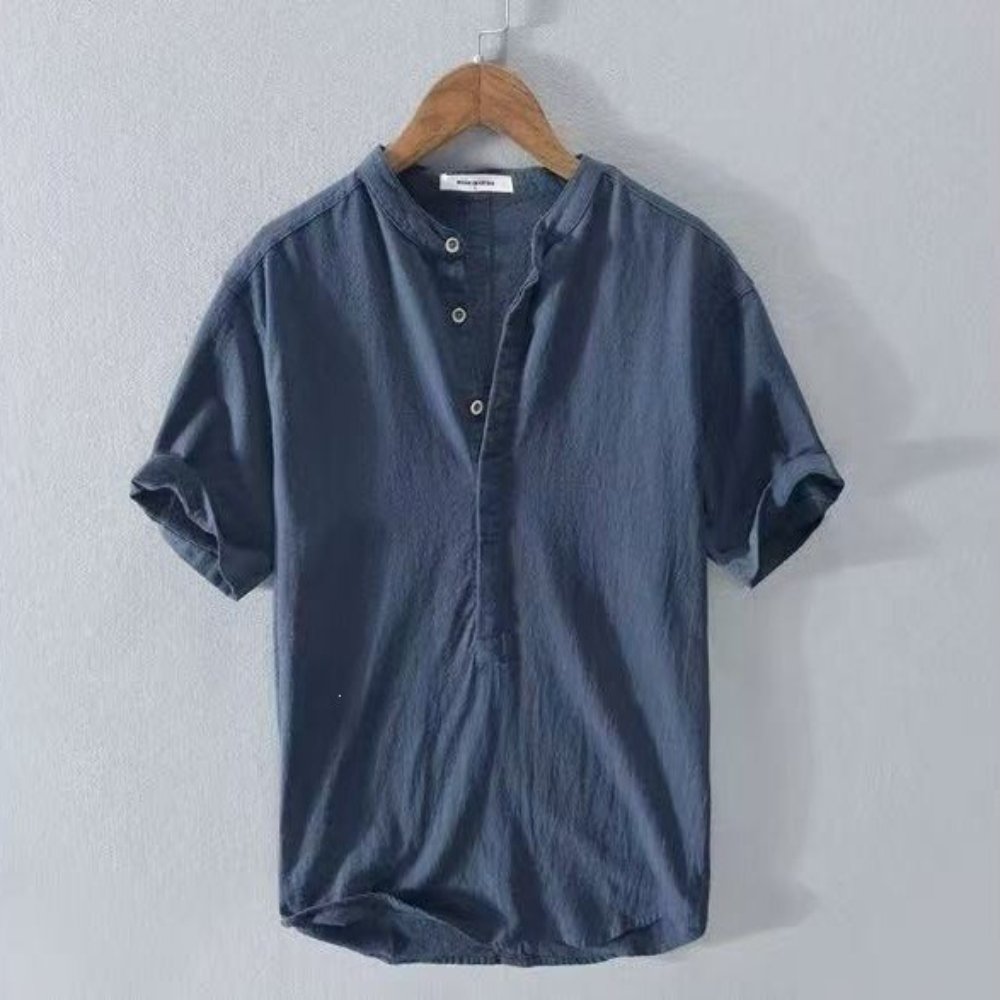
The inspected Short-Sleeve Linen-Cotton Shirt gallery presents this blue-toned garment. The visible texture identifies a catalogue reference, not a fibre ratio or performance result.
The listing names the blend, not the ratio
Xuanao Apparel’s Short-Sleeve Linen-Cotton Shirt listing describes linen-cotton fabric and states “Material: Linen-Cotton blend.” It does not give percentages. For a buyer sourcing wholesale short-sleeved shirts, the first material question is therefore concrete: what proportion of each named fibre applies to the main fabric being quoted?
Keep the catalogue wording in the enquiry so the supplier can identify the item. Add a separate field for the full proposed composition. The order of two fibre names is not a numerical answer, and the visual texture is not a substitute for that answer. A clear response lets purchasing compare actual proposals instead of treating every linen-cotton description as the same fabric.
Ask about the quoted main fabric
Start with the main shirt fabric and request the percentage of each fibre in that fabric. Ask the supplier to identify the fabric reference associated with its response. If the proposed material includes any additional fibre, ask for that to be stated too, rather than supplying a two-fibre percentage template that encourages an incomplete answer.
Then clarify the scope of the declaration. Does the response describe the main fabric only, or is the supplier describing another defined part of the garment? Ask whether any separately specified fabric or material requires its own identification. Keep buttons and other trims separate from the main-fabric question; a garment can have several material descriptions that serve different purchasing purposes.
Identify the actual shirt listing and proposed colour.
Request a full percentage breakdown for the named main fabric.
Ask which fabric reference and sample the breakdown describes.
List any unanswered material scope as pending.
Grey gallery presentation from the same product listing. A colourway reference does not establish a separate composition declaration or a reviewed physical sample.
Use a fabric enquiry table
This table is a buyer’s request format, not a completed specification from the website. Send it with the product link and ask the supplier to fill the response column. An answer such as “same as photo” should lead back to the missing fabric reference and percentages, because a picture cannot supply either field.
Enquiry field
Question for the supplier
Record to retain
Main fabric
What fibres and percentages are proposed?
Complete declaration and date
Material scope
Which garment areas does this describe?
Named fabric/component scope
Sample link
Which fabric and garment sample use it?
Fabric ID and sample ID
Evidence
What supporting document is available?
Document identity and represented material
Link the declaration to the sample
Ask the supplier to put the same fabric reference on the composition response and the proposed sample information. If a fabric swatch is reviewed before a completed shirt, preserve that distinction. Approval of the swatch’s appearance does not automatically identify which material was used in a later garment unless the references connect.
When a sample arrives, retain its label or supplier sample identifier with the material response. If the supplier changes the fabric proposal during quotation, ask for the new reference and percentage breakdown before carrying the previous approval forward. The purpose is to know which declared material the buyer is considering at each decision point.
Black gallery presentation from the inspected listing. Ask which fabric reference and declaration apply to the quoted colour rather than reading composition from the photograph.
Keep colour and weight in their own fields
The listing names White, Gray, Black, Light Blue, Navy and Camel. Ask whether the composition response applies to the specific quoted colour, and whether the supplier proposes any variation across the order. A shared product page makes the colour options easy to find; it does not by itself answer whether every proposed version uses an identical fabric reference.
The page also lists size-linked weights, including M at 143 g and 5XL at 188 g. Those are published garment-weight entries. They are not fabric weight per unit area and cannot reveal a fibre ratio. Keep garment weight, fabric weight if requested, and fibre composition in separate quotation fields so that one numerical answer does not accidentally fill three different requirements.
Match supporting documents to the proposal
If composition evidence matters to the purchase, ask what supporting document the supplier can provide and which material it represents. Record the issuer, reference and date shown on the actual document. Check that its material identity connects to the quoted fabric or ask for the missing link. A document for an unspecified fabric is difficult to use when deciding about this particular shirt.
Distinguish a supplier declaration from an independent test result in the buyer’s file. Decide what evidence the purchase requires, then request it explicitly. Once the missing fields are resolved, keep the accepted composition wording with the fabric, sample and quotation references. Send the completed enquiry through Xuanao’s contact page.
Common linen-cotton sourcing questions
Does linen-cotton mean equal proportions?
The inspected listing gives no ratio. Ask for the actual proposed percentages and their fabric reference rather than assuming an equal blend or interpreting fibre order as a percentage.
Can a garment photograph verify the blend?
No. Use it to identify the catalogue item and visible appearance. Request composition information tied to the quoted fabric and sample for the material decision.
Should a fabric change reopen the response?
Yes. Ask for the revised fabric identity and composition, and connect any new sample or supporting document to that revision before reusing the earlier material approval.
Linen-Cotton ShirtsFabric CompositionApparel RFQ