
Hoodie RFQs: Separate Garment Weight from GSM
When comparing single-piece hoodie weights, ask which size and configuration each gram value represents, and whether packaging is included. Request fabric GSM separately: a finished-garment mass is not a fabric weight per unit area. Keep the selected colourway, sample and weighing basis together before comparing supplier responses.
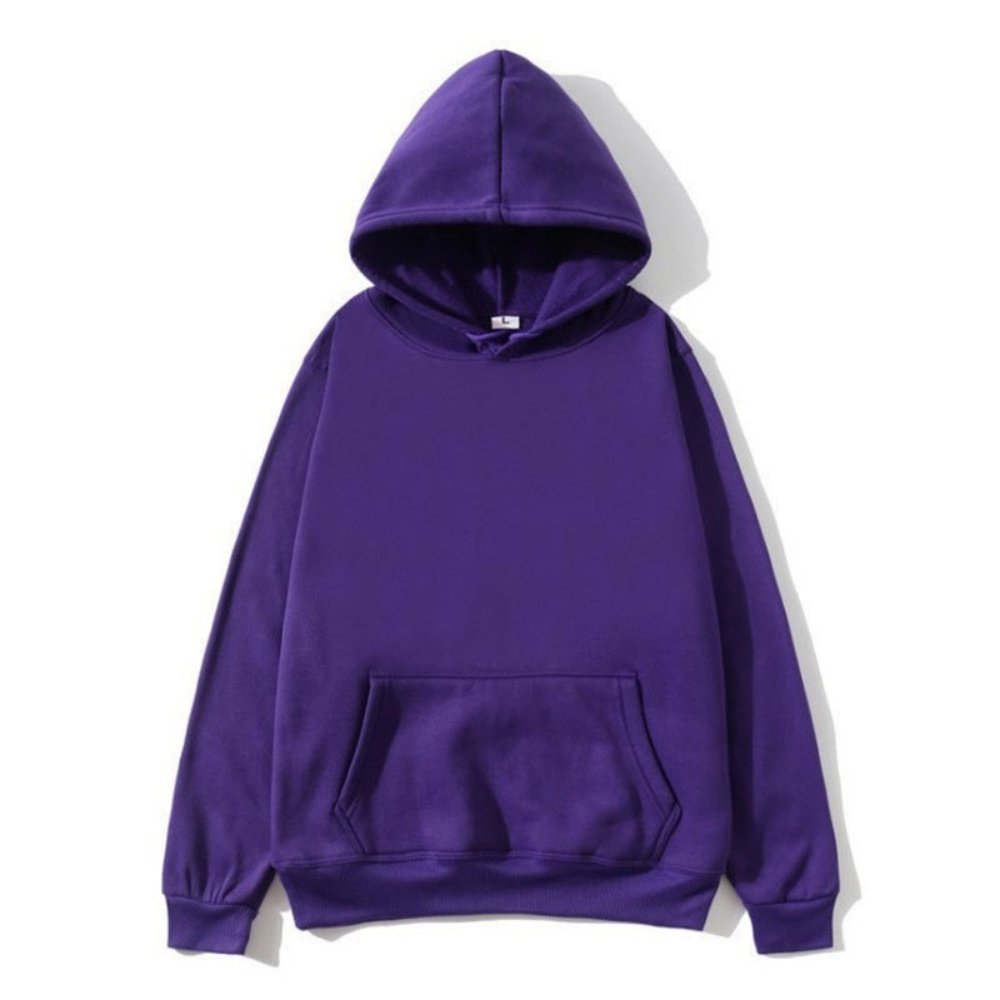
Official Single-Piece Hoodie gallery: purple front reference. The photograph does not identify its mass, fabric GSM or exact quoted size.
Read the weight schedule as a size-linked statement
A hoodie quotation may mention a weight in grams without explaining whether it describes a finished garment, fabric or a packed sales unit. Those values answer different buying questions. For importers sourcing wholesale single-piece hooded sweatshirts, a useful enquiry starts by preserving the size beside each number and asking the supplier to confirm what was weighed.
Xuanao’s Single-Piece Hoodie page lists S at 315 g, M at 325 g, L at 335 g, XL at 350 g, 2XL at 370 g and 3XL at 390 g. Treat these as the supplier’s catalogue entries for clarification. The page also gives a separate packaging dimension of 25 × 35 cm, but that dimension does not say whether a bag, label or other packaging is included in the gram figures.
Keep three different weight questions separate
Finished-garment mass concerns the complete item on the scale. Fabric GSM describes grams per square metre of fabric. Packed-unit mass adds a separate question about the packaging and accessories included in the weighing scope. Request each value under its own heading instead of letting the word weight stand for all three.
Weight field
Enquiry basis
Supplier response needed
Garment mass
Named size and complete configuration
Grams and included parts
Fabric GSM
Identified fabric or component
Grams per square metre and applicable material
Packed-unit mass
Selected garment plus listed packaging
Grams and packaging contents
Carton mass
Confirmed size assortment and carton contents
Net/gross basis and unit count
Do not derive fabric GSM from the catalogue garment weights. The complete item contains several areas and components, while the page does not provide the fabric-area basis needed for that calculation. A larger garment weight also does not, by itself, establish a different fabric specification or a particular level of warmth.
Official gallery: wine-red presentation with visible drawcord. Confirm the selected configuration rather than sharing an assumed weight across every picture.
Identify the actual configuration to be weighed
Attach the selected catalogue view and identify the size, colourway and proposed garment version. The official images include front presentations with visible differences around the drawcord. Ask which version the returned weight schedule describes. Resolve that point before comparing one supplier’s response with another sample or a previous order.
Keep the size label beside the individual gram value.
List the garment parts and detachable items included on the scale.
Record packaging separately when requesting an unpacked garment figure.
If the supplier proposes an alternative fabric or trim arrangement, keep it as a separately identified option. Ask whether its weight schedule changes. An unchanged product name is not enough to show that the same material and component configuration has been used in both responses.
Make sample weighing comparable
Agree a simple sample-weighing basis with the supplier before using the result for acceptance. Identify the sample, selected size, included components and whether it is unpacked. Record the scale reading with its unit and the stated measurement conditions. A photograph of a scale should be linked to the named sample, not just a general hoodie image.
If several sizes are supplied, keep the observations in separate rows. Discuss an unexpected result by checking identity and weighing scope first. Do not silently replace a catalogue entry with a new sample reading, or describe a single observation as the approved tolerance for every unit. Any acceptance range needs its own explicit agreement.
Official gallery: light-blue front reference. Catalogue colour presentations do not independently verify identical fabric or garment weights.
Use the size mix when planning packed quantities
A mixed-size order should retain quantities by size rather than one average garment weight copied from the catalogue. For a preliminary estimate, show the calculation basis and ask the supplier to confirm the actual mass of the proposed packed assortment. Include the chosen retail packaging and carton contents in that response.
Keep a logistics estimate separate from a carrier’s chargeable-weight decision. The 25 × 35 cm packaging entry is not a complete shipping-carton specification and does not establish a freight price. Request the relevant current packed dimensions and masses when preparing the actual transport enquiry.
Compare the same basis before choosing an offer
Return a quotation for clarification when it gives an unlabelled gram figure. Compare like-for-like garment versions, sizes and packaging scopes first. Keep fabric GSM and any material declaration in their own fields, then evaluate the supplier’s current commercial offer using the clarified product information. This gives sampling and logistics usable inputs without promising performance from a weight number.
Frequently Asked Questions
Does S–315 g mean the fabric is 315 GSM?
No. The page links that gram value to size S. Request a separate fabric GSM declaration and its component scope.
Do the published weights include packaging?
The catalogue schedule does not explicitly settle that basis. Ask the supplier which parts were included.
Can one weight stand for every size?
Use the size-linked schedule and confirm the proposed assortment. A single unlabelled number conceals that relationship.
Where should the weighing questions be sent?
Send the selected image and weight table through Xuanao contact. Keep the separate construction discussions in the apparel buying archive.
Hoodie SourcingGarment WeightFabric GSMSample Basis